
A failing warehouse floor in Charlotte costs more than most facility managers expect. Once an emergency epoxy floor repair hits the schedule, the price climbs fast. Downtime, blocked aisles, and rerouted forklift traffic add up quickly. Industrial epoxy flooring in Charlotte, NC, takes a real beating from busy distribution centers and hot summers. Many concrete slabs were never built for today’s pick rates. A small crack near a dock door can spread under heavy wheels in just a few weeks. A peeling patch can shut down a whole lane. The good news is that most floor problems start small and are fixable for a while.
If you run a warehouse in Charlotte, your floor is doing more work than the spec sheet planned for. The real questions are how to keep it running, when to fix it, and how to know if a contractor is steering you right.
Why Industrial Epoxy Flooring in Charlotte, NC Wears Out Faster Than Spec
Most floor systems do not fail because the product was bad. They fail because the system was wrong for the building. A budget warehouse floor coating poured over a poorly prepped slab can peel in just 18 months under daily forklift traffic. Allied Painting reports that this kind of premature failure can cost three times the original bid to strip and redo.
Charlotte has its own pressures. The region added more than 10,000 new warehousing and storage jobs in one recent year. Most of that activity sits along the I-77, I-85, and I-485 corridors. More volume means more pallet movement, more wheel hits, and more chemical spills on every floor. That is why a warehouse floor coating spec that worked five years ago may not hold up today.
Three things cause most failures in this market:
When industrial epoxy flooring in Charlotte, NC, matches the actual load, the floor often runs 10 to 20 years before serious work is needed. The right industrial epoxy flooring in Charlotte, NC starts with a real slab assessment, not a guess.
Signs Your Floor Needs an Epoxy Floor Repair
A floor rarely shouts before it fails. It whispers. Catching the early signs gives you time to plan a small concrete floor repair instead of a costly emergency.
Watch for these signals during your normal walk-throughs:
Any one of these is a reason to call for a closer look. Two or more in the same area usually means the warehouse floor coating is losing its bond with the slab. At that point, an epoxy floor repair is the next step.
Floor problems are not just a maintenance issue. They are a safety issue. The U.S. Bureau of Labor Statistics reports that slips, trips, and falls account for a large share of non-fatal warehouse injuries each year. A worn or slick patch in a high-traffic lane raises that risk every shift.
If you spot a problem early, an epoxy floor repair can often be completed in a single weekend. A targeted concrete floor repair under heavy forklift traffic is even cheaper when it is planned ahead. Wait too long, and the fix gets bigger. The bill grows with it.
A Practical Plan for High-Traffic Epoxy Floor Care
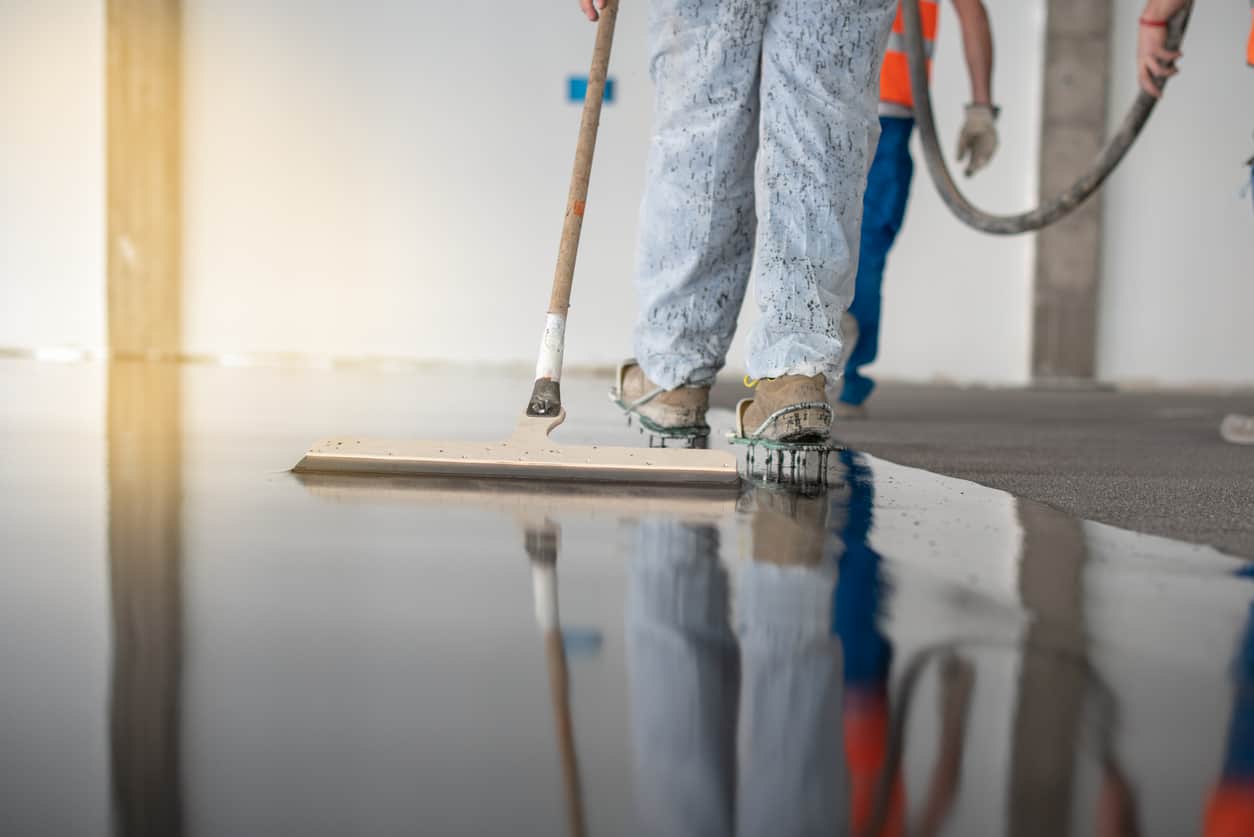
Caring for a warehouse floor coating is not complicated. It just has to be consistent. The plan below works for most Charlotte distribution centers and pays back fast in avoided repair bills.
This plan turns floor care into a line item, not an emergency. That alone can save a busy distribution center thousands of dollars a year.
What Charlotte Facility Managers Should Look for in a Contractor
Picking a contractor is where most projects either succeed or sink. A bad bid often shows up months later as a peeling floor and a service call.
Here is what to ask before you sign anything:
A contractor who answers these questions plainly is treating you like a partner, not a sale. That is the kind of company you want pouring industrial epoxy flooring in Charlotte, NC.
Get a Straight Answer on Your Floor
You are running a warehouse, not a flooring lab. You should not have to become a coatings expert to keep your floor working. That is what we do.
GoEpoxy LLC can walk you through the building, test the slab, and provide a written plan that fits your operation. The fix might be a small epoxy floor repair. It might be a concrete floor repair in a few high-stress spots. Or it might be a fresh round of industrial epoxy flooring in Charlotte, NC, across your worst lanes. You will know the cost and timeline before any equipment arrives.
Call GoEpoxy LLC at 980-332-2972 to schedule a no-pressure floor walk for your industrial epoxy flooring project in Charlotte, NC. Bring your questions. We will bring the moisture meter.